In the quiet corners of Timor-Leste, far from the noise of global fashion capitals, women sit on woven mats with threads stretched tightly across their backs. With calloused hands and steady patience, they weave tais — intricate, hand-loomed cloth that has told the story of their people for generations. This isn’t just fabric. It’s identity, it’s history, it’s heritage held together by the hands of women.
For many Timorese, tais is a tradition that predates the country itself. It’s older than the flag, older than the constitution, older even than the struggle for independence. Each design — every stripe, every symbol — carries a meaning. And now, finally, the world is beginning to understand what this means. In 2021, tais weaving was recognised by UNESCO as part of the Intangible Cultural Heritage of Humanity. For the women who never stopped weaving, even through war and occupation, this recognition felt deeply personal.
What is Tais? It’s More Than Just a Cloth
At first glance, a tais cloth might look like just another ethnic textile. But for those who know, it’s so much more than that. Every region in Timor-Leste has its own patterns, colours, and symbols. Some show animals like crocodiles — seen as sacred in Timorese folklore — while others display traditional geometric designs that have been passed down from mother to daughter for as long as anyone can remember.
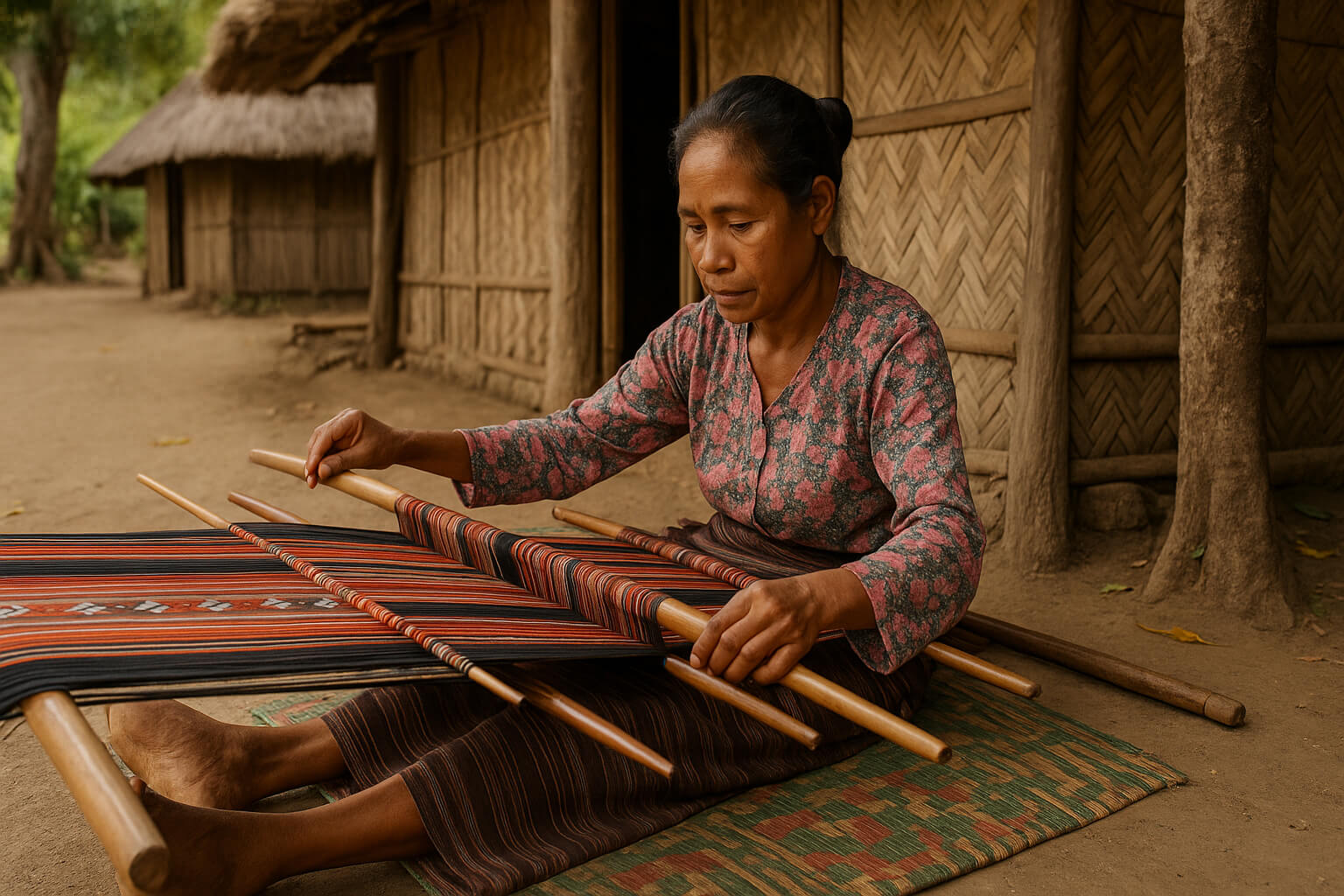
The process itself hasn’t changed much. Using a simple backstrap loom, the weaver becomes part of the loom. She leans forward, controlling tension with her body, guiding thread after thread to create something precise and beautiful. It’s physical work. It demands time, strength, and complete focus. A single piece of tais can take weeks to finish.
And it’s always women who weave. In Timorese culture, the loom belongs to the woman. In fact, many girls learn to weave before they finish primary school. It’s a skill, yes — but it’s also a rite of passage.
Women Who Weave, Women Who Lead
Tais weaving is not just about keeping tradition alive — it’s about survival, dignity, and independence. After the Indonesian occupation ended in 1999, many Timorese women found themselves widowed or left to rebuild broken families. For thousands of them, weaving became not just a connection to their past, but a lifeline for their future.
In small villages across Baucau, Lautém, Oecusse, and Liquiçá, you’ll find women’s weaving groups working quietly but purposefully. The cloths they produce are sold at local markets, sent to Dili shops, and increasingly — abroad. Some NGOs, like the Alola Foundation, have helped women weavers reach global markets while keeping full ownership over their designs and profits.
It’s a form of empowerment that feels deeply rooted. These women aren’t just artisans. They’re businesswomen, teachers, cultural guardians. And every time one of them ties a new thread to the loom, she’s keeping a whole cultural ecosystem alive.
UNESCO Recognition: A Long Time Coming
The 2021 UNESCO listing was more than a headline. It was an overdue moment of validation for a practice that had been overlooked for too long. For decades, tais weaving was seen by outsiders as “folk art” — interesting, perhaps, but not particularly important. That changed when international researchers began documenting the complexity of the patterns, the social meaning behind the cloths, and the way the tradition had survived through colonisation, occupation, and globalisation.
UNESCO’s decision recognised what Timorese people already knew — tais is not just a craft, it’s a living heritage. The listing helped draw attention, funding, and respect. It gave young women a reason to be proud of what their mothers and grandmothers had always done in quiet corners. And it sparked fresh conversations about preservation — not just celebration.
Not All Recognition is Good
With the world’s eyes now on tais, a new challenge has emerged: how to protect it from being copied, commodified, and turned into something it’s not. There have already been instances of imitation cloths made in factories abroad, sold in tourist shops with “Timor-style” labels, but no benefit going to Timorese communities.
That’s why many weaving groups are focusing not just on selling more, but selling smarter. They want to protect the integrity of their designs, keep weaving in the hands of local women, and educate buyers about the meaning behind the cloth.
Some groups have started documenting traditional patterns, assigning them names and stories. Others are teaching younger weavers about their intellectual property rights. It’s still early days, but the idea is simple: tais must be protected, or it risks being lost to mass production.
The Youth Question
One of the biggest concerns facing tais today is whether young women will continue the tradition. Many young people are moving to cities like Dili for education or work. Few of them want to spend hours sitting on the floor, weaving cloth the way their grandmothers did.
But there are signs of hope. Some schools have started offering tais classes again. Cultural festivals often feature weaving demonstrations. A few young designers are blending tais into modern fashion — creating jackets, bags, and even sneakers with traditional patterns.
What’s encouraging is that the young weavers who return to the loom often don’t do it out of obligation — they do it out of pride. They’re not just making cloth. They’re reclaiming a cultural identity that, for a time, seemed like it might fade.
A National Fabric in Every Sense
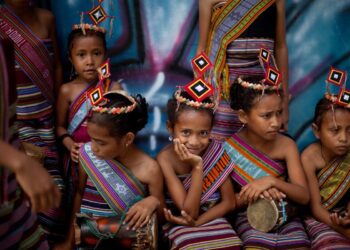
Tais is everywhere in Timor-Leste. It’s used during weddings, funerals, festivals, and official ceremonies. It’s given to visitors as a sign of respect, wrapped around diplomats, or draped over statues. It’s worn by schoolgirls on national holidays and by elders in remote sucos during rituals.
During the years of resistance against Indonesian rule, tais became a quiet symbol of unity. Some say fighters wore it under their clothes for strength. Others say it was used to send messages between villages. No one’s quite sure. But everyone agrees — when independence finally came in 2002, tais was there. And it’s never left.
Holding on to the Thread
In a world where most traditional arts are either commercialised or forgotten, tais has somehow held its place. Not easily. Not without effort. But it’s still here.
It’s here in the hands of women who continue to sit down each morning with a spindle and loom. It’s in the stories they tell their daughters as they dye threads with natural pigments. It’s in the pride of a teenager wearing her first handmade tais at a school ceremony. And now, it’s in the archives of UNESCO, listed alongside the great traditions of the world.
But make no mistake — tais doesn’t belong in a museum. It belongs in homes, on shoulders, in hands. It belongs to the people who made it, who make it still.
It’s not just a piece of cloth. It’s the soul of Timor-Leste — woven line by line, breath by breath.