With an intricate and inspirational history of tenacity, cultural diversity, and the fight for independence, Timor-Leste—officially known as the Democratic Republic of Timor-Leste—is a country in Southeast Asia. From early human settlement to colonial rule, conflict, and eventually independence, the history of this young nation, which is tucked away at the eastern end of the Indonesian Archipelago, spans thousands of years.
Demographics and Geography
The islands of Atauro and Jaco, the coastal settlement of Oecusse in the northwest, and the eastern half of the island of Timor make up Timor-Leste. It faces Australia on the other side of the Timor Sea and shares a land border with Indonesia. The capital and largest city of the 14,950-square-kilometer nation is Dili. Timor-Leste is a young country with a high fertility rate and rising literacy rates, home to more than 1.34 million people as of the 2022 census. Although more than 30 indigenous languages are still used, Portuguese and Tetum are the official languages, reflecting the country’s colonial past and cultural legacy.
Early Settlement and History
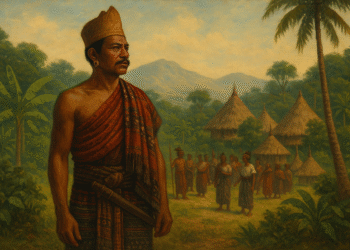
Archaeological evidence from Jerimalai, on the island’s eastern tip, indicates that human settlement in Timor-Leste dates back approximately 42,000 years. Austronesian settlers, who brought agriculture and influenced the current cultural and linguistic diversity, joined the early occupants through the Australo-Melanesian migration. In order to balance political power with spiritual guidance from Rai Nain, ancient Timorese communities arranged themselves into sucos and kingdoms headed by local leaders known as liurais. Timor had developed trading networks with China, India, and Southeast Asia by the 14th century, exporting wax, sandalwood, and honey.
Portuguese colonisation
Attracted by Timor’s valuable sandalwood, the Portuguese first came in the early 16th century. Portuguese rule grew after they lost other lands to the Dutch, whereas the European presence was initially restricted to adjacent islands. Although actual governance remained minimal, Dili became the colonial capital in 1769. Coffee later became a major export, but until the late 19th century, infrastructure and education were neglected. The island’s current border with Indonesia was established in 1914 when its eastern and western divisions were formally established.
Tens of thousands of civilians died as a result of the Allied and Japanese occupations of Timor-Leste during World War II. Portuguese rule returned after the war, but investment was still low and living standards barely changed. Internal strife among regional political factions resulted from Portugal’s 1974 revolution, which left the colony in political limbo.
Indonesian Employment and Independence Movement
The Revolutionary Front for an Independent East Timor (Fretilin) proclaimed independence on November 28, 1975. Days later, Indonesia launched an invasion, annexing the region as its 27th province in July 1976. The decades that followed were characterised by famine, disease, massacres, and grave violations of human rights. Over 100,000 people are said to have died as a result of conflict and its aftereffects between 1974 and 1999. Resistance movements continued on the ground and abroad in spite of repression.
The 1991 massacre of more than 200 peaceful protesters by the Indonesian military, which sparked international indignation, marked a watershed. In 1999, Indonesia consented to a UN-supervised referendum after President Suharto’s overthrow. Pro-integration militias violently responded to the resounding vote for independence, but a multinational peacekeeping force quickly stepped in and a United Nations Transitional Administration (UNTAET) was established.
Regaining Independence
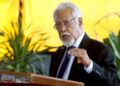
Timor-Leste became the first new independent country of the twenty-first century when it regained full sovereignty on May 20, 2002. José Ramos-Horta, a Nobel Peace Prize winner and a pivotal figure in the independence movement, succeeded Xanana Gusmão as its first president. Following the normalisation of relations with Indonesia, Timor-Leste has worked towards regional integration, including talks to become a member of ASEAN.
Contemporary Times and Governance
A prime minister chosen by parliament and an elected president share power in Timor-Leste, which is currently a unitary semi-presidential republic. Despite its advancements, the country still has economic difficulties because it depends so much on foreign aid and the profits from oil and gas. Although living conditions have improved due to efforts in governance, infrastructure, and education, sustainable development is still a top priority.
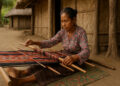
Due to Portuguese rule, the majority of Timor-Leste is Catholic; however, traditional beliefs continue to have sway, particularly in rural areas. Its resilience, youth, and cultural diversity are essential components of its national identity.
The history of Timor-Leste demonstrates the people’s tenacity. From early settlements and a rich cultural legacy to centuries of cruel colonial occupation, neglect, and a hard-won independence, the country is still constructing its future with an emphasis on progress, unity, and international collaboration. In Southeast Asia, Timor-Leste is a symbol of perseverance and hope as it works to turn its hardships into opportunities for future generations.